Shih Tzu Breathing Problems: How Breathing Changes Throughout Your Dog's Life
by Janice Jones, Published 07-09-2026
The first time one of my Shih Tzus started making strange snorting sounds, I wasn't sure whether to laugh, worry, or rush to the veterinarian. Over the years, I learned that Shih Tzus make all kinds of unusual breathing noises—and while many are harmless, some signal a real problem. If you have a Shih Tzu that snorts (like a pig), sneezes, honks, snores, or breathes loudly, you may also have experienced confusion: Is this sound something that needs an immediate visit to an emergency vet, can it wait until tomorrow to see my regular vet, or can I safely ignore this sound?
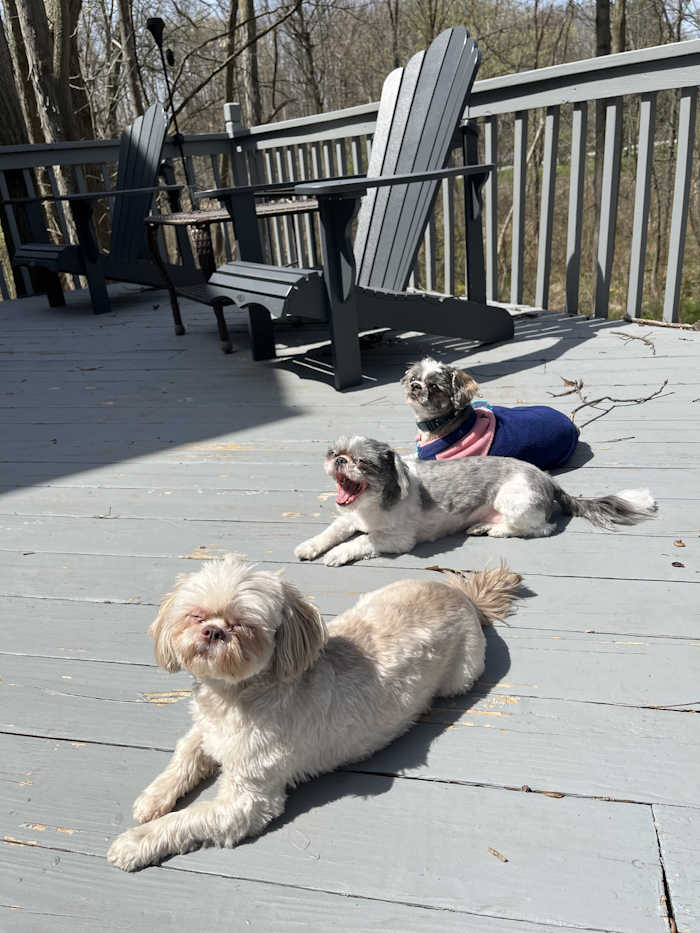 Our dogs, Rosie, Breezie, and Cooper
Most dog owners don’t like to ignore all those odd sounds, but in this article, I am going to help you understand what these sounds may indicate. Some are serious, but many can be comfortably ignored.
I’ve had many Shih Tzu dogs over the years, most of whom were very healthy and had few breathing problems. But there’s always that exception.
- The Shih Tzu that snores so loud that you can’t get any sleep at night.
- The old man that suddenly develops a thick nasal discharge making it difficult to breathe.
- The adolescent who sneezes frequently especially in certain situations.
But those are not the only examples, so let me walk you through some breathing problems that can emerge as your Shih Tzu matures.
In this guide I'll share what I've learned from living with Shih Tzus for many years, along with what veterinarians look for when breathing changes occur.
Why Shih Tzus Are More Likely to Have Breathing Problems
Most people are aware that Shih Tzu dogs have flat faces. Those faces, coupled with large eyes, are what many of us fall in love with, but without a long snout, breathing problems can plague the breed.
When a dog has a flat face and short nose, the normal canine airway is reduced, creating the possibility of breathing difficulties. This is referred to as Brachycephalic Obstructive Airway Syndrome, and I will go into that in more detail below.
How to Tell Whether a Breathing Change Is Normal or a Warning Sign
| What You Notice | Usually Normal? | Needs Veterinary Attention? |
|---|---|---|
| Quiet snoring | Often | Sometimes, especially if it becomes louder or is paired with breathing difficulty |
| Reverse sneezing | Usually | If frequent, prolonged, or more severe than usual |
| Play sneezing | Yes | No, unless sneezing continues outside of play or excitement |
| Thick nasal discharge | No | Yes |
| One-sided nasal discharge | No | Yes, especially if persistent or bloody |
| Fast breathing while asleep | No | Yes |
| Blue, gray, or pale gums | Never | Emergency |
| Collapse or fainting | Never | Emergency |
What Normal Breathing Sounds Like
Some Shih Tzus
- Snore
- Snort
- Sigh
- Reverse sneeze occasionally without being sick.
- Sneeze
Puppy Breathing Problems
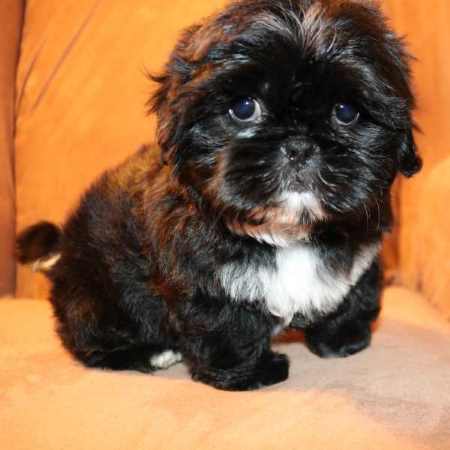
When I was breeding, I tried to reduce the risk of breathing problems by making thoughtful breeding decisions, but genetics is complex, and I still saw some issues in the puppies I kept and in those about which puppy buyers were kind enough to let me know.
Congenital airway problems
Sometimes puppies are born with problems that may or may not improve as they mature.
Stenotic Nares
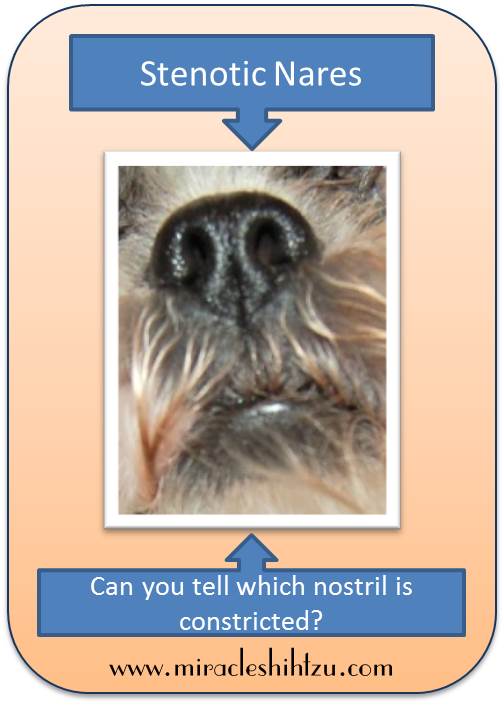 This dog has pinched nostrils, also known as stenotic nares.
Puppies’ noses are small to begin with, but when the openings (nares are narrow, puppies can struggle to get air in and out. Many times, these little noses will grow as the puppy grows, but not always. Keeping a close eye on the puppy is prudent, and seeking veterinary advice is a must. Learn more about stenotic nares.
Early BOAS (also known as brachycephalic obstructive airway syndrome)
BOAS (Brachycephalic Obstructive Airway Syndrome) is a group of breathing problems caused by the shortened skull and crowded airways found in flat-faced breeds like the Shih Tzu. These upper airway abnormalities restrict airflow in flat-faced dogs. Learn more about BOAS.
Heart murmurs
Some Shih Tzu puppies are born with a heart murmur, an extra sound your veterinarian hears while listening to the heart. Many puppy murmurs are harmless and disappear as the puppy grows, but others may indicate an underlying heart condition that needs monitoring or treatment.
I have a dog named Dana who is not quite 13 years old. She was diagnosed with a heart murmur at her 8-week checkup. I wanted to keep her anyway but wasn’t sure I’d ever breed her. At 1 ½ years old, my vet could no longer hear a murmur, so she went on to have several beautiful, healthy litters. At her last vet visit, we requested a cardio workup (bloodwork and EKG) and found she was fine.
 Dana is shown here as a young mom.
 Dana is shown here as a senior with only one eye.
Reverse sneezing:
This is one that frightens many people, and, to be honest, the sounds coming from that little face can be intense. Reverse sneezing is a brief spasm of the throat and soft palate that causes a dog to make repeated snorting sounds while quickly inhaling. It often resolves on its own, but frequent or severe episodes should be discussed with your veterinarian. Excitement, pulling on a leash, strong odors, allergies, or irritation in the nose or throat can sometimes trigger a reverse sneeze. Learn about Reverse Sneezing.
Sneezing
Sneezing is usually easy for dog owners to recognize and may or may not be accompanied by a short spray of nasal fluid. My dog Breezy will run at top speed into a room to find me, jump up, get in my face, and then sneeze, expelling any nasal mucus from her nares. YUCK! Is she sick? Probably not.
Sneezing can mean many different things. Just like humans, dogs can sneeze if they have allergies or respiratory infections, including kennel cough.
Sometimes they may inhale something, and the sneeze is a reflex that can rid the dog of an unwanted dust particle. But sneezing is also completely harmless, and dogs seem to have mastered the sneeze as a communication technique. Dog behaviorists often call this form of canine communication play sneezing.
Dogs sometimes demonstrate this during play, excitement, or greetings. I saw this behavior in very young puppies (8 weeks old), so I’m not sure that anyone taught them to do this.
 This dog, Breezy, is known for running at top speed, jumping up, and placing her face as close to mine as she can before sneezing. I think she is probably trying to get my attention.
Adult Shih Tzu Breathing Problems
Many breathing problems don't appear overnight. Instead, owners often notice small changes that gradually become more frequent or more severe. A Shih Tzu that once enjoyed long walks may begin to slow down, cough after exercise, breathe more noisily, or take longer to recover after play.
The most important thing you can do is learn what is normal for your own Shih Tzu.
Seasonal allergies
Allergies are common in the Shih Tzu breed and can manifest in various ways. Like people, some Shih Tzus develop seasonal allergies that flare up during certain times of the year, causing sneezing, itchy skin, watery eyes, or mild nasal discharge. More commonly, though, Shih Tzu dogs with allergies will show signs such as itchy skin and rashes, licking or chewing at the feet, ear infections, or watery eyes, which result in brown colored tear stains around the face. Learn about allergies in Shih Tzu Dogs.
Weight gain
Some Shih Tzu dogs tend to gain weight as they age, especially after being spayed or neutered. They become less active and, without careful control of their diet, may gain a couple of pounds. Even just a few extra pounds can make breathing more difficult by putting additional strain on a Shih Tzu's already narrow airways. You might notice worsening snoring and exercise intolerance. Learn more about obesity.
Exercise intolerance
Exercise intolerance means your Shih Tzu tires more quickly than expected, struggles to keep up on walks, pants heavily after mild activity, or needs frequent breaks. In Shih Tzus, it can be related to BOAS, excess weight, heart disease, collapsing trachea, heat, pain, or age-related changes, so a new or worsening pattern should be discussed with your veterinarian.
Collapsing trachea
If you have ever heard a goose honk, you will know what this sounds like. A collapsing trachea occurs when the rings that normally keep the windpipe open become weak, allowing the airway to narrow during breathing. Many owners mistake a collapsing trachea for kennel cough or assume their dog has something stuck in its throat, so it's important to have a persistent honking cough evaluated by your veterinarian.
Heart Disease
Early heart disease may cause a Shih Tzu to tire more easily, breathe faster than normal while resting, or develop a persistent cough, especially at night. Because these signs can resemble other breathing problems, a veterinary examination is needed to determine the underlying cause.
In adults and seniors, degenerative heart disease, particularly mitral valve disease, can occur in older small-breed dogs.
At the vet's, your dog may have blood work, chest x-rays, EKG, or a cardiac ultrasound. Your vet will also listen for heart murmurs, irregular heart rhythms, abnormal lung sounds, and lung fluid. If you suspect any problems, it is most important to visit your veterinarian.
Senior Shih Tzu Breathing Problems
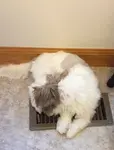
 This is Cooper, a 14-year-old Shih Tzu with breathing problems
Cooper is now 14 years old and has been a very healthy dog. He was part of the very first litter I bred in Ohio, but, like me, his age is catching up with him.
As a senior myself, I am keenly aware of how aging affects my beloved Shih Tzu dogs. It is so sad to lose a dog, and as dog owners, we will go out of our way to keep our babies happy and healthy. But age creeps up, and we also must ensure their comfort.
I lost two dogs within two weeks of each other due to respiratory problems. After thousands of dollars, we never discovered the underlying cause. One was a rescue named Lola that had a preexisting respiratory problem (probably some form of kennel cough), and the other, my tiny Ketchikan, who caught what the rescue had brought into the home and succumbed to the infection. Luckily, we were able to treat all the other dogs in the household, but it was a very sad time for us. This lesson taught us that breathing problems should never be ignored.
Cooper presented with respiratory distress, thick, yellow nasal mucus, and overall malaise. He has always suffered from allergies (environmental), which we have kept under control with medications, but this new sign is different. He has seen three different vets, and they have ruled out lung congestion, heart involvement, and BOAS. We’re still trying to determine the correct diagnosis, but he was treated with an antibiotic shot. His problem could be as simple as an allergy, but could it also be caused by dental disease?
Dental Disease
Dental disease is very common in the Shih Tzu breed, and severe infections around the upper teeth can sometimes spread into the nearby nasal passages. This may lead to nasal discharge, sneezing, or other breathing-related symptoms that require veterinary treatment. Regular tooth brushing, dental chews (when appropriate), and routine veterinary dental examinations can help reduce plaque buildup and identify problems before they become severe.
In our own case, this particular Shih Tzu gets a dental chew every day, but he has never allowed us to brush his teeth. Our dogs have professional dental cleanings about every other year, but now that Cooper is 14, the decision is not as simple. I personally wonder whether his nasal discharge could be related to dental disease, but I am not a veterinarian, and his vet is cautious about putting a senior dog under anesthesia unless the benefits clearly outweigh the risks. As Shih Tzus get older, one breathing change owners may notice involves the heart. Learn more about Dental Health.
Heart Disease
As Shih Tzus enter their senior years, heart disease becomes a more common cause of breathing changes. While younger dogs are more likely to have congenital heart murmurs, older dogs are more likely to develop degenerative conditions such as mitral valve disease, which can eventually lead to congestive heart failure if left untreated.
Unlike many respiratory conditions that begin with sneezing or nasal discharge, heart disease often causes coughing, exercise intolerance, an increased resting respiratory rate, or difficulty breathing when fluid accumulates in the lungs. Some dogs cough more at night or after lying down because changes in body position can make fluid buildup more noticeable. Another age-related possibility is chronic rhinitis.
Chronic Rhinitis
If your Shih Tzu has a runny nose that doesn't seem to improve, your veterinarian may consider chronic rhinitis. This long-term inflammation of the nasal passages can cause ongoing congestion and nasal discharge, but because several other conditions produce similar signs, further testing is often needed to confirm the diagnosis. Your veterinarian may recommend additional tests, including imaging or a procedure to examine the nasal passages, if the diagnosis remains uncertain.
Respiratory Infections
Respiratory infections can affect dogs at any age, but in senior Shih Tzu, they may require extra caution because older dogs may have less reserve.
Respiratory infections are another possible cause of coughing, sneezing, nasal discharge, and changes in breathing in Shih Tzu. One of the most common is canine infectious respiratory disease complex (CIRDC), often called "kennel cough," which can be caused by several different viruses and bacteria rather than a single germ.
Vaccines are available to help protect against some of the most common causes of kennel cough, including Bordetella bronchiseptica, canine parainfluenza virus, and canine adenovirus type 2. Depending on your dog's lifestyle and local disease risks, your veterinarian may also recommend vaccines for canine influenza. While vaccination doesn't prevent every respiratory infection, it can reduce the risk and severity of illness.
Nasal Tumors
Although uncommon, nasal tumors are one reason veterinarians take persistent one-sided discharge or nosebleeds in older dogs seriously. Because these signs can also be caused by less serious conditions, additional testing may be needed to determine the underlying cause.
Fungal Infections
Fungal infections are uncommon but may be considered depending on where you live and your dog's symptoms. Different forms of fungal infections occur in different parts of the world. This is something only a vet could rule out.
How Veterinarians Diagnose Breathing Problems
Veterinarians have quite an array of tools in their toolboxes for diagnosing breathing problems these days. When you take your dog to the veterinarian, expect them to
- Take a History
- Provide a Physical exam
- Listening to lungs
- Check and listen to the heart
- Checking airflow
- Do chest x-rays
- Do an EKG
- Do Bloodwork
- Do an ultrasound
- A Microscope slide?
The microscope slide surprised me, but it was a way that the vet could tell whether the dog was breathing through both nostrils. If one nostril were totally blocked, the diagnosis could be different.
Things I've Learned After Living With Shih Tzus
There are many things that my Shih Tzu dogs have taught me over the years: Heat matters, humidity matters, and excitement matters. Heat is a real problem for this breed, so my dogs stay in the air-conditioned house during the summer. I tried to give them a kitty pool, but they didn’t like it. One puppy buyer solved the outdoor problem by teaching her Shih Tzu to swim in a pool. Our Shih Tzu dogs did better when we lived in areas with lower humidity.
Weight matters. The dogs that were of ideal weight do better than those that were overweight or underweight.
I stopped using collars and only used harnesses instead when walking them on a leash.
I have developed a way to know what each dog’s “normal” is and only react when something changes that normal.
When Breathing Problems Are an Emergency
- Blue gums
- Collapse
- Cannot catch breath
- Extreme heat
- Severe distress
- Open-mouth breathing that doesn't stop
- High fever (generally over 103°F/39.4°C)
Why does my Shih Tzu snore?
Why does my Shih Tzu snore?
Snoring is common in Shih Tzus because their flat faces and shortened airways restrict airflow during sleep. Mild snoring is often normal, but loud snoring that suddenly worsens or is accompanied by breathing difficulties should be evaluated by your veterinarian.
Why is my Shih Tzu sneezing?
Why is my Shih Tzu sneezing?
Shih Tzus sneeze for many reasons, including allergies, respiratory infections, inhaled irritants, and even excitement or play. Occasional sneezing is usually nothing to worry about, but persistent sneezing, thick nasal discharge, or bleeding from the nose warrants a veterinary examination.
Can allergies make my Shih Tzu wheeze?
Can allergies make my Shih Tzu wheeze?
Allergies more commonly cause sneezing, itchy skin, watery eyes, and clear nasal discharge than wheezing. If your Shih Tzu is wheezing or struggling to breathe, your veterinarian should rule out other conditions such as BOAS, respiratory infections, or heart disease.
Can dental disease cause breathing problems?
Can dental disease cause breathing problems?
Yes. Advanced dental disease, especially infections involving the upper teeth, can sometimes spread into the nearby nasal passages. This may cause nasal discharge, sneezing, congestion, or other breathing-related symptoms that require veterinary treatment.
Can heart disease make breathing difficult?
Can heart disease make breathing difficult?
Yes. As Shih Tzus age, heart disease becomes a more common cause of coughing, exercise intolerance, and rapid breathing. If your dog develops a persistent cough or begins breathing faster while resting, your veterinarian should evaluate the underlying cause.
Why does my Shih Tzu breathe faster while sleeping?
Why does my Shih Tzu breathe faster while sleeping?
A temporary increase in breathing rate during dreaming can be normal, but consistently rapid breathing while your dog is resting or asleep may indicate heart disease, lung disease, pain, fever, or another medical problem. Any persistent increase in resting breathing rate should be discussed with your veterinarian.
Do breathing problems get worse with age?
Do breathing problems get worse with age?
They can. While some Shih Tzus have mild breathing noises throughout their lives, senior dogs are more likely to develop age-related conditions such as heart disease, dental disease, chronic rhinitis, or respiratory infections that can make breathing more difficult.
Why is only one nostril running?
Why is only one nostril running?
Discharge from only one nostril is more concerning than discharge from both. It may be caused by dental disease, a foreign object, chronic inflammation, a fungal infection, or, less commonly, a nasal tumor. Because several conditions can cause one-sided nasal discharge, your veterinarian may recommend additional testing to determine the cause.
Conclusion
One thing I've learned after living with Shih Tzus for many years is that changes in breathing are often gradual. Knowing what's normal for your own dog makes it much easier to recognize when something has changed. While many breathing noises are simply part of living with a flat-faced breed, others deserve prompt veterinary attention. When in doubt, I'd rather make one unnecessary veterinary appointment than miss the early signs of a problem that could have been treated.
Janice Jones is a Shih Tzu specialist and former breeder with a background in veterinary care, grooming, training, and canine behavior. She has spent nearly 50 years working with the breed and ran a home-based breeding program for 15 years, raising well-socialized puppies. Early in her career, she worked as a veterinary assistant supporting surgery, x-rays, and lab work. She shares practical guidance at miracleshihtzu.com and across social platforms. Today, she enjoys the quiet companionship of her aging dogs, understanding them as they understand her.
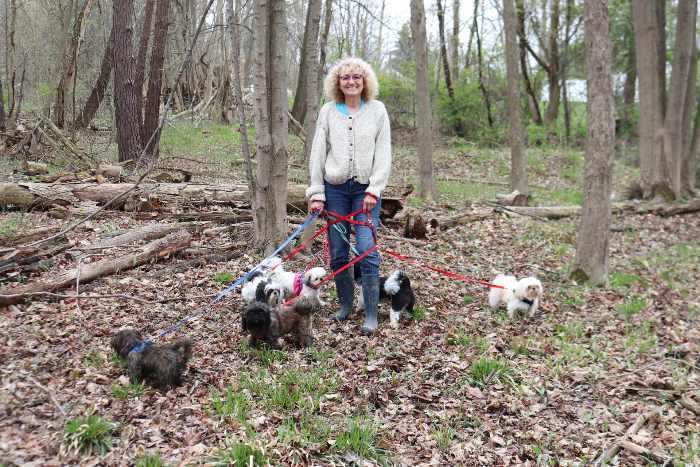 You guessed it, I'm not a trained dog walker.
FTC Disclosure: If you purchase via a link on this site, I may receive a small commission on the transaction at no additional cost to you. Thank you!
Janice Jones is a Shih Tzu specialist and former breeder with 50 years of experience and a background in veterinary care, grooming, and behavior.
Recent Articles


-
Shih Tzu Breathing Problems Throughout Your Dog's Life
Jul 09, 26 06:33 PM
 From puppyhood to the senior years, discover the common breathing problems that affect Shih Tzus, what causes them, and when veterinary care is needed.
 -
Foods Toxic to Dogs: What to Avoid and When to Call the Vet
Feb 05, 26 03:50 PM
 Some common foods can be dangerous or life-threatening for dogs. Learn which foods to avoid and when to seek veterinary help if ingestion occurs.
 -
Shih Tzu Heat Stroke: Signs, Risk Factors, and When to Call the Vet
Feb 05, 26 03:21 PM
 Heat stroke can be life-threatening for Shih Tzu dogs. Learn the warning signs, common risk factors, and when immediate veterinary care is needed.


Tzu Tips: Monthly Free Newsletter
Find out about the free gift you will receive just for signing up for my newsletter.
Miracle Shih Tzu Highly Recommends


Or, Read How We Use NuVet Vitamins at Miracle Shih Tzu. All Puppies are Started on this Product. Find out why
Advertising
Miracle Shih Tzu is a participant in the Amazon Services LLC Associates Program, an affiliate advertising program designed to provide a means for sites to earn advertising fees by advertising and linking to amazon.com. This site receives a small commission from all affiliate links and third-party advertising.